Lesson Plan Ideas: 8 Patterns for Teachers Who Are Out of Inspiration
Stop hunting for the perfect downloadable lesson. Use these 8 repeatable patterns to generate fresh, engaging lesson plan ideas in any subject, any grade.
Matariki classroom activities for Years 0 to 10 in Aotearoa New Zealand, built on New Zealand sources: art, writing, maths, science and shared kai, with a week planning table for the 2027 public holiday.
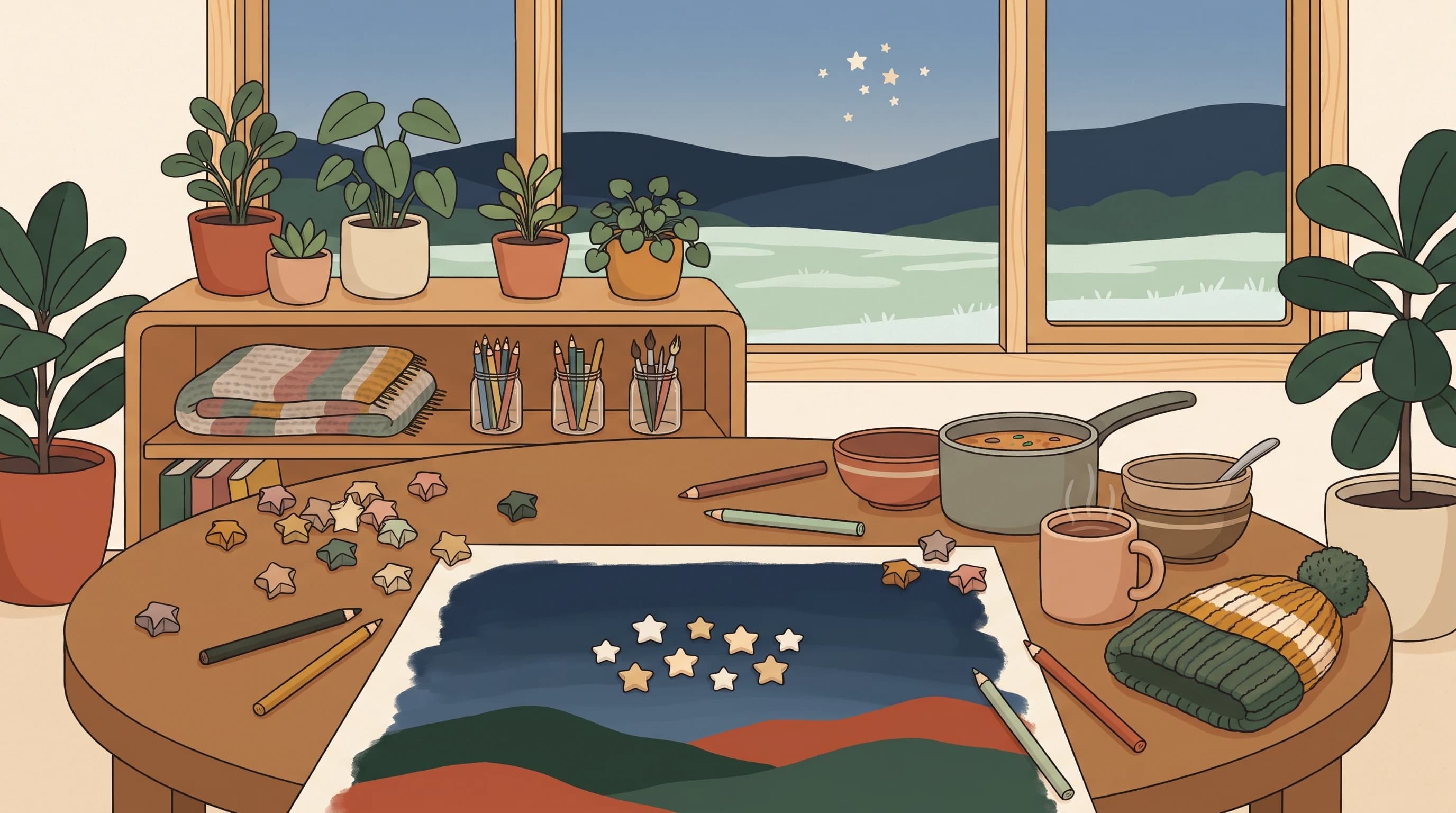
Matariki is the Māori New Year, marked by the rising of the Matariki star cluster in the early morning sky in mid-winter. Te Papa describes it as a time for whānau and friends to look back, enjoy the present and look ahead. It is also a public holiday in Aotearoa New Zealand, and in 2027 the holiday falls on Friday 25 June.
This page is for teachers in New Zealand schools who want Matariki learning that is accurate, respectful and genuinely curriculum-linked. You will find the key facts with their sources, activities in art, writing, maths, science and kai for Years 0 to 3, 4 to 6, 7 to 8 and 9 to 10, a planning table for the week, and a short checklist for working respectfully with mātauranga Māori.
Use New Zealand sources and, above all, the knowledge of your local iwi, hapū and whānau. Traditions differ between regions, so treat the points below as a national starting point rather than the only version.
The stars. Te Papa acknowledges nine stars of Matariki: Pōhutukawa, Tipuānuku, Tipuārangi, Waitī, Waitā, Waipunarangi, Ururangi, Hiwa-i-te-Rangi and Matariki. Te Papa also explains that for some people the cluster has seven stars, for others nine, and that elsewhere in the world the cluster is known as the Pleiades.
| Star | Associated with (paraphrased from Te Papa) |
|---|---|
| Pōhutukawa | Those who have died |
| Tipuānuku | Food grown in the soil, such as kūmara |
| Tipuārangi | Food from the trees and birds |
| Waitī | Fresh water and the food it sustains |
| Waitā | The ocean and its food sources |
| Waipunarangi | Rain |
| Ururangi | Winds |
| Hiwa-i-te-Rangi | Wishes and aspirations for the year ahead |
| Matariki | Reflection, hope, the environment, gathering, health and wellbeing |
Not everyone marks Matariki. Te Papa notes that some iwi cannot see the cluster from their region and mark the new year with the star Puanga instead. Ask what your local community follows before you plan.
The three principles. The Matariki Advisory Committee’s report Values for Matariki celebrations, prepared by Professor Rangi Matamua and published by MBIE, describes three principles: remembrance (honouring those lost since the last rising of Matariki), celebrating the present (gathering to give thanks) and looking to the future (looking forward to the new year). The same report lists values including aroha, whakamaumaharatanga, kotahitanga, manaakitanga, tohatoha, mana taiao and kaihaukai. It also describes the traditional ceremony whāngai i te hautapu, in which food was cooked and offered to the stars.
The public holiday date. The holiday moves each year. Te Papa’s table of public holiday dates explains that it falls on the Friday closest to the Tangaroa lunar period, and lists Friday 25 June 2027 (Tangaroa period 27 to 30 June). The same date appears in MBIE’s public holidays and anniversary dates.
In 2027 the public holiday is Friday 25 June, so the week usually has four school days. This plan suits a Years 4 to 6 class; adjust the activities for other year levels using the lists above.
| Day | Focus principle | Literacy | Maths | Science or art | Kai |
|---|---|---|---|---|---|
| Monday 21 June | What do we know? | Start a KWL chart on Matariki; learn star names with macrons | Begin sunrise time data | Weather chart for Waipunarangi and Ururangi | Plan the class kai and allergy list |
| Tuesday 22 June | Remembrance | Read about Pōhutukawa; optional private remembrance card | Continue data; make a table | Model Earth’s orbit with a lamp and ball | Scale the soup recipe for the class |
| Wednesday 23 June | Celebrating the present | Gratitude writing; practise a waiata taught by a community member or from a school resource | Graph sunrise times; describe the pattern | Star cluster prints with captions | Shopping list and budget |
| Thursday 24 June | Looking to the future | Wishes for Hiwa-i-te-Rangi; set class goals | Count down: days until the holiday | Finish art; prepare a short presentation | Shared kai with whānau invited; serve guests first |
| Friday 25 June | Public holiday | No school |
If your school runs Matariki learning in a different week, or your community follows Puanga, keep the structure and change the dates.
Each activity above becomes a lesson when you add a clear learning goal, a short explicit teaching step, practice and a check for understanding. Our lesson plan ideas guide explains the cross-curricular bridge pattern used here, and the free lesson plan template gives you a page to fill in. If Matariki is the context for a longer unit, the New Zealand unit plan template shows how to link it to the curriculum’s teaching sequences.
When is Matariki in 2027? The Matariki public holiday in 2027 is Friday 25 June, according to Te Papa’s table of dates and MBIE’s public holidays list.
What are good Matariki activities for Year 1 and 2? Simple star naming with pictures, a wish star for Hiwa-i-te-Rangi, counting and patterns with nine stars, a weather chart and a shared snack. Keep each one tied to a clear learning goal.
How many stars are in Matariki? Te Papa acknowledges nine stars. It also notes that some traditions count seven.
What are the principles of Matariki? The Matariki Advisory Committee describes three: remembrance, celebrating the present and looking to the future.
What Matariki art can my class make? Star cluster paintings or prints with captions, a nine-star collage showing each star’s domain, or posters for a school event. Avoid copying traditional designs without guidance from someone who holds that knowledge.
Blog