Scheme of Work Template for UK Teachers (With a Complete Example)
A copyable scheme of work template, a six-week worked example and a clear guide to curriculum references across England, Scotland, Wales and Northern Ireland.
What medium term planning is in English primary and secondary schools, a copyable medium term plan template and a complete six-week Year 4 science example you can adapt for your own half-term.
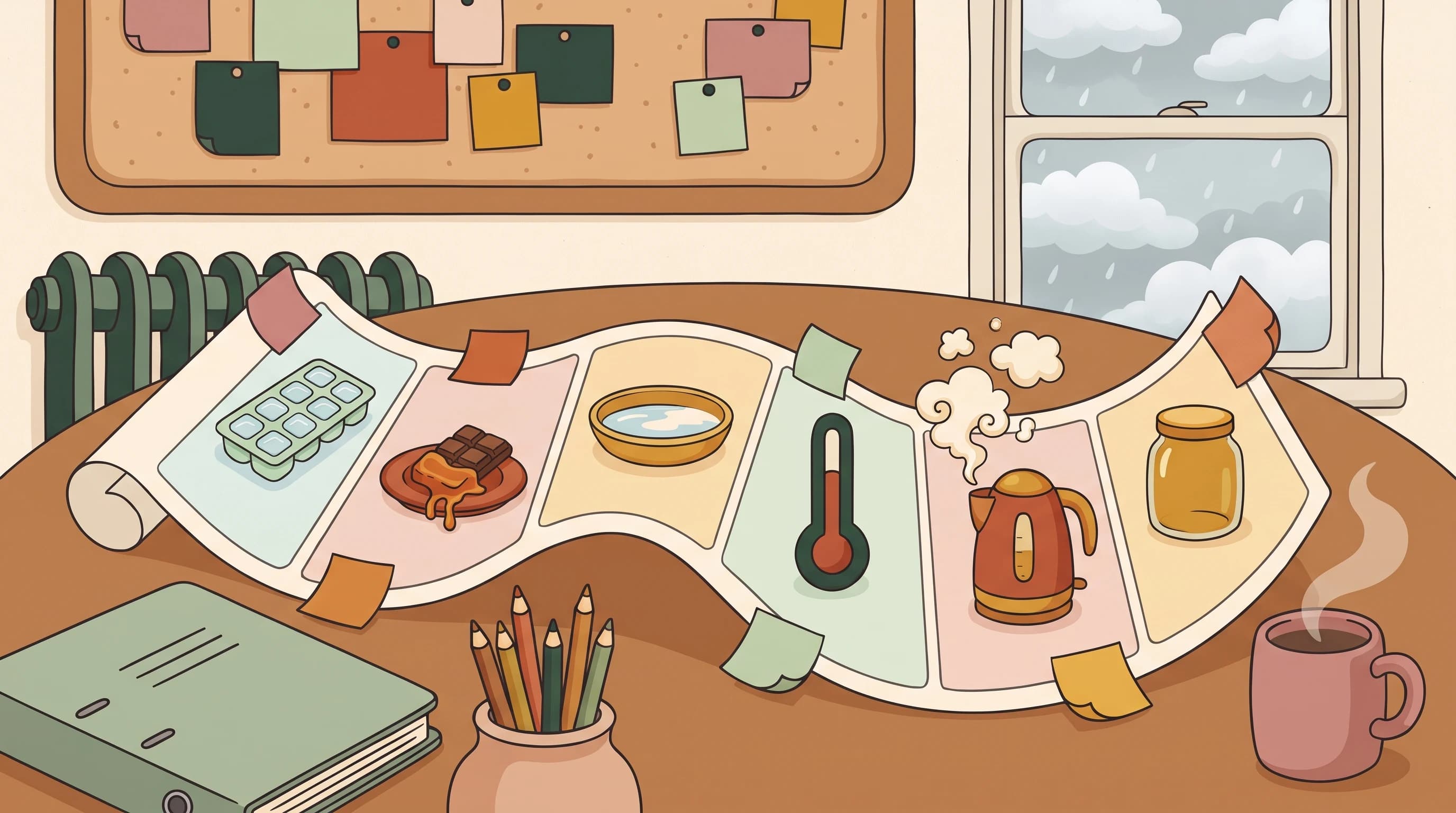
A medium term plan sets out what a class will learn over a half-term or a term, in what order, and how you will know it has been learned. It sits between the long term plan (the year or key stage overview) and the lessons you teach each day. In most English primary schools it covers one subject or topic for a half-term; in secondary schools it usually covers one unit for a department.
This page is for class teachers, subject leaders and trainees in England. It explains the three planning layers, what the Department for Education has said about planning workload, what a useful medium term plan contains, and then gives you a copyable medium term plan template and one complete six-week Year 4 science example built from the national curriculum programme of study.
Most schools in England describe planning in three layers. The names vary, but the jobs are stable.
| Layer | Typical span | Main question | Typical owner |
|---|---|---|---|
| Long term plan | A year or a key stage | Which units are taught, and when? | Curriculum or subject leader |
| Medium term plan | A half-term, term or unit | In what sequence, with which checkpoints and end evidence? | Subject leader, year team or class teacher |
| Short term plan | A lesson, day or week | What exactly happens in this lesson? | Class teacher |
A curriculum map is one common form of long term plan. A lesson plan is the short term layer. The medium term plan is the layer that makes the other two connect: it turns “Spring 1: States of matter” into six weeks of learning that build on each other.
Many schools use the two terms interchangeably. Others keep “scheme of work” for a full, resourced sequence shared by every teacher of a subject, and “medium term plan” for the half-termly version a teacher or year team adapts. If your school uses a scheme of work, the scheme of work template shows a fuller version with resources and moderation. This page focuses on the half-term layer you adjust for your own class.
There is no statutory medium term plan format in England. The decisions sit with schools, but three official sources shape what a good plan should do.
The national curriculum sets the content. The national curriculum sets programmes of study by key stage: Key Stage 1 (Years 1 to 2), Key Stage 2 (Years 3 to 6), Key Stage 3 (Years 7 to 9) and Key Stage 4 (Years 10 to 11). Academies and private schools do not have to follow it, but GOV.UK states that academies must still teach a broad and balanced curriculum including English, maths and science. Your plan should name the programme of study statement you are teaching, or your trust’s own curriculum where that applies. The subject documents are in the national curriculum collection.
The DfE workload review favours sequences over individual lesson plans. The Planning and Resources Group report, published by the Department for Education in March 2016, set out principles for planning. In summary, it says that planning a sequence of lessons matters more than writing individual lesson plans, that detailed daily or weekly plans should not be a routine expectation, that fully resourced schemes of work should be in place for teachers each term, and that planning should not be done simply to please outside organisations. It also suggests subject and phase leaders choose planning tools that suit their subject or age group. A medium term plan is exactly the sequence-level document this report puts first.
Curriculum change is coming. The government published its response to the Curriculum and Assessment Review in November 2025. Until any revised programmes of study come into force, plan from the documents currently on GOV.UK, and keep the reference field in your plan easy to update.
Scotland, Wales and Northern Ireland use different curriculum structures and planning language. If you teach outside England, use the nation-specific reference fields in the scheme of work template rather than English key stages.
A medium term plan does not need to describe every activity. It needs to make the sequence and the evidence visible to anyone who picks it up: you in week four, a supply teacher, or a subject leader looking at progression.
Copy this block into your planning document. Delete the lines you do not need, but keep the end point and the checkpoints.
Copyable text
Copy includes the complete text. No signup needed.
MEDIUM TERM PLAN
School / phase:
Subject:
Year group / class:
Half-term and dates:
Number of weeks and lessons per week:
Teacher or team:
Last reviewed:
Curriculum source and statements covered:
Whole-school or trust priorities:
End point (what pupils will know and be able to do):
End-of-unit evidence:
Prior learning and how it will be checked in week 1:
Key knowledge:
Key vocabulary:
Likely misconceptions:
Week 1 - Learning focus:
Key knowledge and vocabulary:
Core activity or enquiry:
Checkpoint:
Adaptations:
(repeat for each week)
Adaptations across the unit (SEND, EAL, greater depth):
Resources, trips and safety notes:
Cross-curricular links:
Review notes for next time:
If your school prefers a grid, use the same fields as columns:
| Week | Learning focus | Key knowledge and vocabulary | Core activity or enquiry | Checkpoint | Adaptations |
|---|---|---|---|---|---|
| 1 | |||||
| 2 | |||||
| 3 | |||||
| 4 | |||||
| 5 | |||||
| 6 |
This example uses the Year 4 “States of matter” statements in the national curriculum science programme of study. Check the statements against the current version before using it, and adjust the order to your school’s long term plan.
Subject: Science Year group: Year 4 Half-term: Spring 1, six weeks, one 90-minute science session per week plus two short retrieval starters
Statements covered (Year 4 programme of study, paraphrased): compare and group materials as solids, liquids or gases; observe that some materials change state when heated or cooled; measure or research the temperature at which this happens in degrees Celsius; identify the part played by evaporation and condensation in the water cycle; associate the rate of evaporation with temperature. Working scientifically (lower Key Stage 2): set up simple comparative and fair tests, take accurate measurements using standard units including with thermometers, and use results to draw simple conclusions.
End point: Pupils can sort materials into solids, liquids and gases using their properties, explain melting, freezing, evaporation and condensation as changes caused by heating or cooling, read a thermometer in degrees Celsius, and use the water cycle to explain where a puddle goes.
End-of-unit evidence: A labelled water cycle explanation written from their own evaporation results, plus a ten-question retrieval quiz.
Prior learning: Year 2 work on everyday materials and their uses; Year 3 work on rocks. Week one opens with a sorting task that shows what pupils already think.
Key vocabulary: solid, liquid, gas, state, melt, freeze, evaporate, condense, temperature, degrees Celsius, thermometer, water vapour, water cycle.
Likely misconceptions: “Gases are not real because you cannot see them”; “steam is the cloud you can see” (the visible cloud is condensed water droplets); “evaporation makes water disappear”.
| Week | Learning focus | Core activity or enquiry | Checkpoint |
|---|---|---|---|
| 1 | Solids, liquids and gases have different properties | Sort everyday materials, then debate tricky cases such as sand, a sponge and toothpaste using “holds its shape”, “pours” and “fills its container” | Pupils justify one tricky sort in writing |
| 2 | Gases are real and can escape | Compare an opened and an unopened fizzy drink over a lesson; inflate a balloon and discuss what is inside | Exit question: where did the gas go? |
| 3 | Heating and cooling can change state | Observe chocolate, butter and ice warming and cooling; draw before and after diagrams (no baking or burning, which cause chemical change) | Labelled diagram using melt and freeze correctly |
| 4 | Measuring the temperature of changes of state | Read thermometers in degrees Celsius while ice melts; research the melting point of other materials | Thermometer reading task, accurate to the nearest marked division |
| 5 | Evaporation is faster when it is warmer | Fair test: identical water dishes in a warm and a cool place, measured over several days | Prediction, results table and one-sentence conclusion |
| 6 | Evaporation and condensation in the water cycle | Use week 5 results to explain a puddle drying; observe condensation on a cold surface; build the water cycle diagram | End-of-unit explanation and retrieval quiz |
Adaptations across the unit
Resources and safety: thermometers or data loggers, a kettle used by an adult only, ice trays, chocolate and butter (check allergies), shallow dishes, measuring jugs.
Review notes (fill in after teaching): which checkpoint showed the biggest gap, and which week needs more time next year.
Each row can now become one lesson. Put the week’s learning focus and checkpoint into a UK lesson plan template or the lesson plan template tool, and the lesson already has its objective and its check for understanding.
The fields are the same in a secondary department, but the emphasis changes.
| Feature | Primary (class teacher) | Secondary (department) |
|---|---|---|
| Scope | One subject or topic for one class | One unit taught by several teachers to several classes |
| Unit of time | Weeks | Lessons (often numbered per fortnight) |
| Assessment | Teacher checkpoints and end-of-unit task | Common assessment, marked and moderated across classes |
| Homework | Often whole-school routines | Planned per lesson or per week in the unit |
| References | Programme of study for the year group | Key Stage 3 programme of study, or the exam board specification at Key Stage 4 |
| Adaptation | Known class, adapted by the teacher | Shared plan, adapted by each teacher for their own class |
For a secondary unit, number the rows by lesson rather than by week, add a column for the homework or retrieval task, and agree the common assessment before the first lesson. If the unit follows an exam board specification at Key Stage 4, quote the specification reference exactly as the board publishes it.
A list of activities instead of a sequence. “Week 3: chocolate experiment” says what pupils do, not what they learn. Write the learning focus first, then the activity.
No end point. If you cannot say what pupils will know at the end of the half-term, the weekly rows will drift. Write the end point and the end evidence before filling the grid.
Checkpoints only at the end. A single test in week six tells you too late. Plan at least one short check each week.
Copying the whole programme of study at the top. Name the statements this half-term covers, and show in which week each is taught.
Planning every lesson in full in advance. The DfE workload report quoted above warns against routine detailed daily or weekly plans. Keep the medium term plan at sequence level and write lessons a week or so ahead, using what the checkpoints show.
Before you share the plan, check:
What is medium term planning?
Medium term planning is the sequencing of learning over a half-term, term or unit: the end point, the weekly or lesson-by-lesson order, the key knowledge and vocabulary, and the assessment checkpoints. It sits between the long term plan and individual lessons.
What should a medium term plan include?
At minimum: the curriculum statements covered, the end point, prior learning, key vocabulary, a weekly sequence, checkpoints and adaptations. Resources, safety notes and review notes make it reusable.
Is a medium term plan the same as a scheme of work?
Often, yes. Some schools use “scheme of work” for a fully resourced, department-wide sequence and “medium term plan” for a teacher’s half-term version. Follow your school’s terminology; the scheme of work template covers the fuller version.
How long is a medium term plan?
Usually one half-term, which is about six or seven weeks, though some schools plan a full term or a whole unit. One to three pages is enough if the sequence and checkpoints are clear.
Do I have to write a medium term plan?
There is no national format in England. Your school or trust decides what planning it expects. The DfE’s 2016 planning workload report puts sequences of lessons before individual lesson plans, so if your school asks for planning, a clear medium term plan is the layer worth your time.
Blog