Lesson Plan Objectives: 3 Types, Bloom’s Verbs, and ABCD Examples
The 3 objective types are cognitive, affective, and psychomotor. Use the free builder, Bloom’s verb bank, and ABCD examples to write your own.
What learning intentions and success criteria are, how to co-construct success criteria with students, and 30 examples by subject and grade.
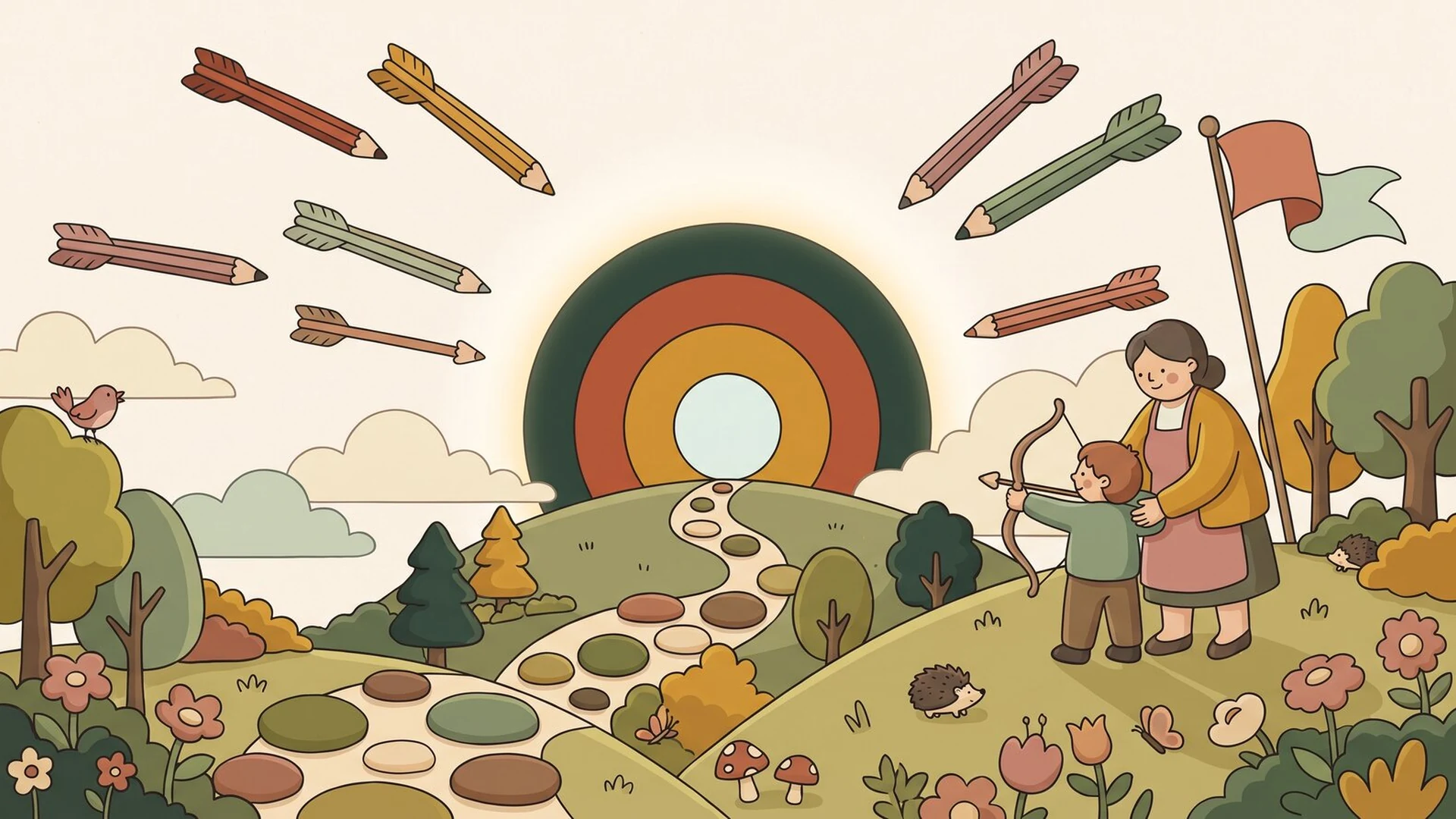
A learning intention is a short statement of what students are learning. Success criteria describe what it looks like when they have learned it: the specific things students will do, say, make or write to show it. Together, they give students a clear target and a way to check their own progress during the lesson.
Teachers in Australia, New Zealand, Ireland and the UK usually say “learning intentions”; in Ontario the official term is “learning goals”; in the United States the most common search is simply “success criteria”, often paired with “I can” statements. Many primary classrooms use WALT (We Are Learning To) and WILF (What I’m Looking For). This page explains the idea, shows how to co-construct success criteria with students, and gives 30 examples by subject and grade, a template and a worked example.
Learning intentions and success criteria come from the research and practice of formative assessment, or assessment for learning.
| Term | Question it answers | Example (Grade 5 science) |
|---|---|---|
| Learning intention | What are we learning? | We are learning to explain why some materials dissolve faster than others. |
| Objective | What will students be able to do, under what condition and how well? | Given results from two trials, students will explain the effect of temperature on dissolving time in two sentences with data. |
| Success criteria | How will we know we have learned it? | I can name the variable I changed. I can use our data to describe the pattern. I can explain the pattern using the word “particles”. |
| Activity | What will we do? | Dissolve sugar cubes in cold and warm water and time them. |
The objective is usually written for the teacher and the plan; the learning intention is written for students. For measurable objectives, see our guide to lesson plan objectives.
Clarke’s distinction between product and process criteria is the most useful idea when you write success criteria.
Process criteria tell a student what to do when stuck, and they transfer to the next task.
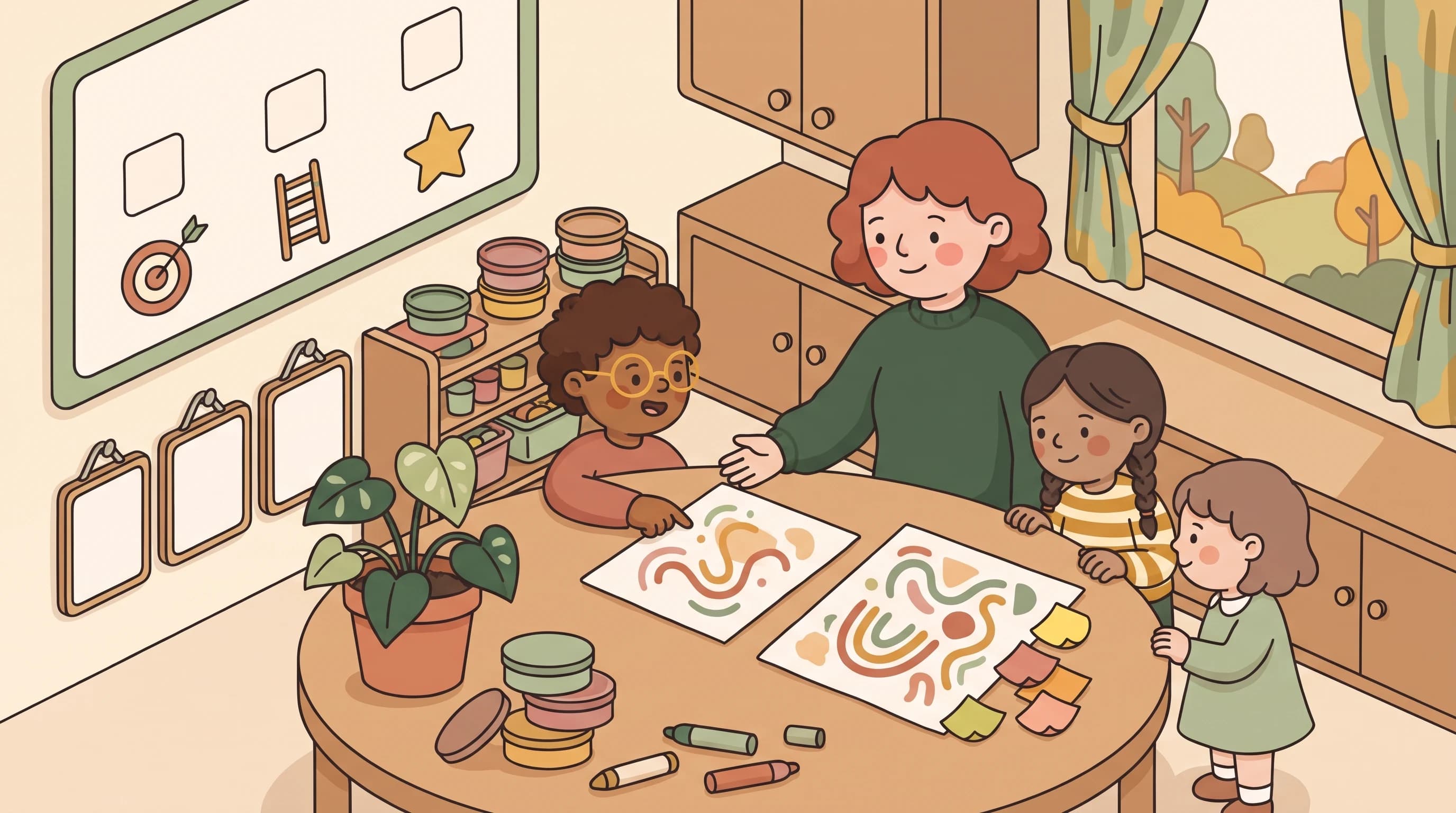
Growing Success notes that examining samples of student work helps students understand what constitutes success and gives a basis for informed co-construction of success criteria. Five practical ways to do it:
Co-construction pairs well with gradual release; see I do, we do, you do.
Grades are a guide; adapt the wording to your class and curriculum.
| Subject and grade | Learning intention | Success criteria |
|---|---|---|
| Reading, K | We are learning to retell a story. | I can say what happened at the beginning, middle and end. |
| Phonics, 1 | We are learning to blend sounds to read words. | I can say each sound. I can push the sounds together. I can read the word. |
| Writing, 1 | We are learning to write a sentence. | I can start with a capital letter. I can leave finger spaces. I can end with a period. |
| Math, K | We are learning to count objects accurately. | I can touch each object once. I can say one number for each object. I can tell how many altogether. |
| Math, 2 | We are learning to add two-digit numbers. | I can split numbers into tens and ones. I can add the tens, then the ones. |
| Science, 2 | We are learning to sort materials by their properties. | I can describe a material using a property word. I can sort objects into groups. |
| Social studies, 1 | We are learning how families change over time. | I can compare an old and a new photo. I can name one thing that changed. |
| Subject and grade | Learning intention | Success criteria |
|---|---|---|
| Reading, 3 | We are learning to work out word meanings from context. | I can find clue words near the new word. I can suggest a meaning and check it. |
| Writing, 4 | We are learning to support an opinion with reasons. | I can state my opinion clearly. I can give two reasons. I can add an example for each reason. |
| Writing, 5 | We are learning to use dialogue to show character. | I can punctuate speech correctly. I can show feelings through what a character says. |
| Math, 3 | We are learning to understand multiplication as equal groups. | I can draw equal groups. I can write a multiplication sentence for my drawing. |
| Math, 4 | We are learning to compare fractions. | I can use a model to show each fraction. I can explain which is greater and why. |
| Math, 5 | We are learning to multiply decimals by whole numbers. | I can estimate first. I can multiply and place the decimal point. I can check against my estimate. |
| Science, 4 | We are learning to plan a fair test. | I can name the variable I change. I can name what I keep the same. |
| Social studies, 5 | We are learning to use primary sources. | I can say who made the source and when. I can describe what it shows. |
| Physical education, 3 | We are learning to throw overarm with accuracy. | I can step with my opposite foot. I can point at the target. I can follow through. |
| Subject and grade | Learning intention | Success criteria |
|---|---|---|
| ELA, 6 | We are learning to identify a theme. | I can describe what the main character learns. I can state a theme as a sentence. I can support it with two pieces of evidence. |
| ELA, 8 | We are learning to evaluate an argument. | I can identify the claim. I can judge whether the evidence is relevant. |
| Math, 6 | We are learning to solve ratio problems. | I can write the ratio. I can use a table or tape diagram. I can explain my answer in context. |
| Math, 7 | We are learning to solve two-step equations. | I can undo operations in the correct order. I can show each step. I can check by substituting. |
| Science, 7 | We are learning to explain how energy moves in a food web. | I can identify producers and consumers. I can draw arrows in the direction energy flows. I can predict the effect of removing one organism. |
| History, 8 | We are learning to explain causes of an event. | I can name two causes. I can say whether each is short-term or long-term. I can support each with evidence. |
| World language, 7 | We are learning to describe daily routines. | I can use reflexive verbs correctly. I can sequence my day with time words. |
| Art, 6 | We are learning to create depth in a drawing. | I can use overlapping. I can make distant objects smaller. |
| Subject and grade | Learning intention | Success criteria |
|---|---|---|
| English, 10 | We are learning to analyze how an author builds tension. | I can identify two techniques. I can quote evidence. I can explain the effect on the reader. |
| Algebra, 9 | We are learning to interpret the slope of a linear model. | I can calculate the slope. I can state its units. I can explain what it means in the context. |
| Biology, 10 | We are learning to explain how enzymes are affected by temperature. | I can describe the trend in the data. I can use the term active site. I can explain why activity falls at high temperatures. |
| Chemistry, 11 | We are learning to balance chemical equations. | I can count atoms on each side. I can adjust coefficients only. |
| History, 11 | We are learning to assess the reliability of a source. | I can identify origin and purpose. I can explain one strength and one limitation. I can reach a justified judgment. |
| Computer science, 12 | We are learning to debug a program systematically. | I can reproduce the error. I can isolate the faulty section. I can test my fix. |
Copyable text
Copy includes the complete text. No signup needed.
LEARNING INTENTION AND SUCCESS CRITERIA PLANNER
Lesson: ............ Grade / class: ............ Date: ............
Curriculum reference (standard / outcome / expectation):
Learning intention (student language)
We are learning to ...
Context for this lesson (task, text, topic):
Success criteria (process, observable, 3 or 4)
I can ...
I can ...
I can ...
Co-construction plan (samples to compare, or model with mistakes):
When I will check each criterion:
During the lesson:
At the end (exit ticket question):
Next step if most students miss a criterion:
Curriculum reference: the opinion writing standard or outcome your school uses for Grade 4 (Year 4 or 5 in many other systems).
Learning intention: We are learning to support an opinion with reasons.
Context: a paragraph answering “Should our school have a longer recess?”
Co-construction (10 minutes): the teacher shows two paragraphs. A says “Recess should be longer because it is fun. I like it. It is the best.” B gives two different reasons, each with an example. Pairs list what B does that A does not, and the class agrees on three criteria:
Teaching (15 minutes): the teacher models a paragraph on a different question, thinking aloud about whether each reason is really different.
Practice (15 minutes): students write. Halfway through, partners check criterion 2 only and give feedback in the words of the criterion.
Check (5 minutes): exit ticket: “Underline your two reasons. Circle the example for each one.” The teacher sorts tickets into three piles: both reasons and examples, reasons without examples, and repeated reasons.
Next lesson: the repeated-reasons group works with the teacher; the rest add a counterargument and a new criterion.
The criteria do not mention length, neatness or effort, so students can reuse them on any opinion task. For graded levels of quality, turn them into a rubric.
Success criteria describe what successful learning looks like for a specific learning intention: what students will do, say, make or write to show it.
The learning intention states what students are learning. The success criteria state how they, and you, will know they have learned it.
WALT stands for “We Are Learning To” and introduces the learning intention. WILF stands for “What I’m Looking For” and introduces the success criteria. They are classroom shorthand, not official terms.
Co-constructing criteria from examples of work helps students see what quality looks like. You do not have to do it every time; for a new or complex skill it is worth the extra minutes.
Blog