Parent-Teacher Conferences: A Guide for New Teachers
Prepare individual progress conferences and whole-class meetings with clear evidence, family input, agreed actions and a copyable follow-up record.
Draft My Lesson Team

It is the night before your first round of parent-teacher conferences. You have grades, work samples, and too many possible opening lines. A clear structure will not remove every difficult conversation, but it can help you leave each meeting with evidence, an agreed next step, and a record of what happens next.
Key takeaways
- Identify the meeting type before you prepare. A whole-class welcome and an individual progress conference need different materials and outcomes.
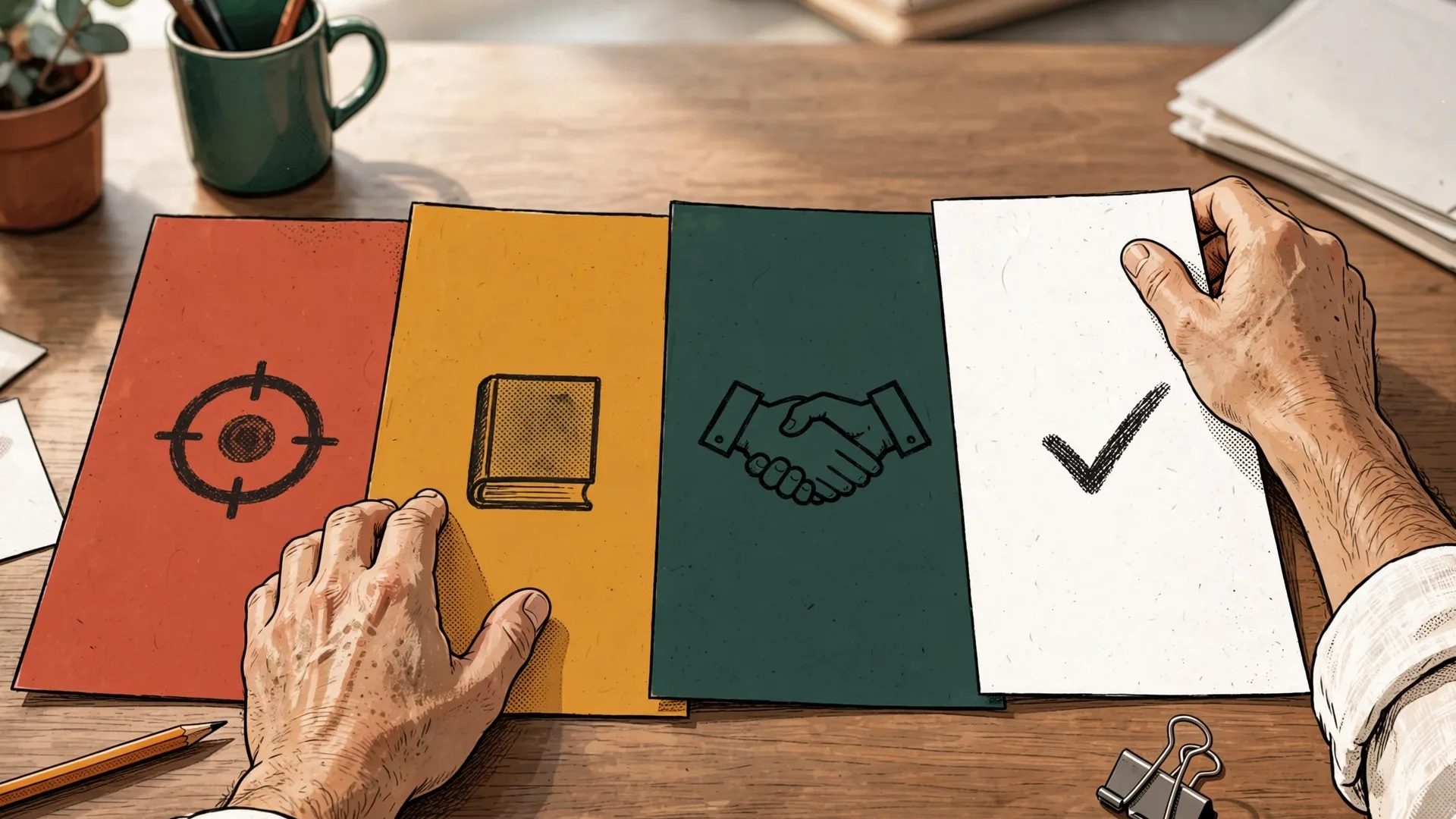
- Use a four-part structure for individual meetings: evidence, concern, proposal, agreement.
- Ask families what they see and what access they need, including an interpreter or remote option.
- Record one owner and one date for every agreed action, then send a short written summary.
- The Education Endowment Foundation guidance on parental engagement recommends communication that is personalised, linked to learning, and designed to encourage two-way exchange.

Know which meeting you are planning
Schools use different names for family meetings, and the same label can mean different things. Do not infer the format from the country or the event name. Check the invitation, school policy, length, attendees, and expected outcome.
| Meeting type | Main purpose | Useful preparation | A realistic outcome |
|---|---|---|---|
| Whole-class or year-group welcome | Explain routines, curriculum, communication, and common expectations | A short overview, key dates confirmed by the school, and a route for private questions | Families know how the class works and where to ask for help |
| Scheduled individual progress conference | Review one student's learning and agree next steps | Two or three work samples, current evidence, and one possible action | Teacher and family agree who will do what and when to review it |
| Concern-led meeting | Address a specific academic, attendance, or behaviour concern | A dated factual record, relevant policy, and the right colleague or specialist | The concern is clearly defined and a proportionate next step is recorded |
| Student-led conference | Let the student explain learning, goals, and selected evidence | A rehearsal, portfolio, reflection prompts, and family questions | The student names progress and one next goal |
US schools may say “Back-to-School Night” or “parent-teacher conference”; schools in England may use “parents' evening”; Australian and New Zealand schools may use “parent-teacher interview”; Canadian usage varies by province and school. These are examples of language, not a national timetable or a guarantee about format.
The 24-hour prep checklist
- Confirm the time, duration, location or video link, attendees, and school expectations.
- Ask whether the family needs an interpreter, accessibility support, separated meetings, or another adjustment. Use the school's approved service rather than a child as interpreter.
- Select two or three recent pieces of work that show the strength and the issue you want to discuss.
- Check grades, attendance, messages, and support records for surprises or contradictions.
- Write one sentence each for a strength, a concern stated as an observable pattern, and a possible next step.
- For a sensitive meeting, ask the appropriate colleague or administrator to attend and follow local policy.
- Put the copyable record below in your notes or print this page from your browser.
For a whole-class event, prepare a brief tour of the curriculum, routines, and communication channels. Keep individual student information for private conversations.
The 5-minute structure for individual conferences
For a short individual conference, use the opening minutes to establish a shared picture, then protect time for the family's knowledge and questions. Adjust the sequence to the duration and process set by your school.
- Evidence. Show one strength and the relevant work or record. “Here are Maya's last three exit tickets.”
- Concern. Describe the pattern without assigning character or motive. “She completes the first step accurately and often leaves the second step blank.”
- Proposal. Offer one small classroom action and ask what is feasible at home. A proposal is open to revision.
- Agreement. Record the action, owner, and review date. If there is no agreement, record the open question and who will follow up.
How to frame difficult feedback
Lead with the reason for the meeting and use behavior or work evidence. “Four assignments have not been submitted” gives everyone something concrete to examine. “He is lazy” does not.
Separate observation from interpretation: “I noticed X. I am wondering whether Y is contributing.” Ask, “What are you seeing at home?” and allow enough silence for a real answer. The family's account may change the next step.
If the discussion becomes abusive or unsafe, pause it and follow your school's policy. Arrange for the appropriate colleague to join a resumed meeting. Write a factual note with the date, attendees, evidence discussed, decisions, and unresolved points.
For the written progress report, use the report card comments framework to turn evidence into a concise statement of current learning, progress, and one next step.
A walkthrough: a 15-minute individual conference, scripted
This fictional practice scenario uses a Grade 5 student named Maya. Her in-class mathematics is accurate, but several homework tasks are incomplete. Her mother works nights.
0:00 to 1:00. Welcome and access.
“Thank you for making time. We have fifteen minutes. Is there anything you need so we can use the time well?”
1:00 to 4:00. Strength and evidence.
“Maya explains mental-math strategies clearly. Here are two examples. I also want to show you the pattern I am seeing in recent homework.”
4:00 to 7:00. Concern and family view.
“Three of the last six tasks were incomplete. What does homework time look like from your side?”
[Pause. Listen before proposing a cause or solution.]
7:00 to 11:00. Build the proposal.
“I can give Maya five minutes to check that she understands the task before she leaves. Would a short, consistent start time at home be realistic, or is another arrangement more workable?”
11:00 to 13:00. Agreement.
“Let me check the plan: I will do the end-of-day check from Monday. Maya will use the agreed start time on three days. I will email you next Friday with the completion record, and we will review after two weeks.”
13:00 to 15:00. Questions and close.
“What have I missed, and what would you like me to know? Thank you. I will send the short summary today.”

When the family needs an interpreter or a remote meeting
For an interpreted meeting, send the interpreter the purpose and key school terms in advance where policy permits. Speak to the family member, use short complete sentences, pause for interpretation, and budget extra time. Check the agreement by asking each person to restate their action rather than asking only “Do you understand?”
For a remote meeting, test the link and captions, confirm who is present, and avoid displaying another student's information. If the connection fails, use the school's approved fallback. Send the same written agreement you would after an in-person meeting.
Copyable preparation, agreement, and follow-up record
Copy this into your notes, or use your browser's print command to print the page.
STUDENT / CLASS:
DATE, TIME, FORMAT:
ATTENDEES AND ROLES:
ACCESS OR INTERPRETING ARRANGEMENTS:
MEETING PURPOSE:

PREPARATION
Strength shown by this evidence:
Concern stated as an observable pattern:
Student's view, if collected:
Question for the family:
Relevant school policy or support:

AGREEMENT
Action 1 / owner / due date:
Action 2 / owner / due date:
How progress will be observed:
Review date and method:
Open question and owner:

FOLLOW-UP
Summary sent on:
Evidence reviewed on:
What changed:
Continue, adjust, or escalate:
Next contact:
The record is useful only if it stays specific. “Try harder” has no owner or observable result. “Teacher provides a worked example on Monday; student completes the first two questions before leaving; family and teacher review completion on 16 October” can be checked and adjusted.
The teacher planner guide can help you keep this evidence without turning every lesson into paperwork.
Draft My Lesson is the AI-powered lesson-planning tool built for English-speaking K-12 teachers. Plan your lessons in minutes and spend more time on what matters. Try it free.
Related articles
How to Write a Lesson Plan: A 7-Step Guide for Teachers
A step-by-step method for writing a classroom-ready lesson plan in under 30 minutes, with three real K-12 examples and the components every plan needs.
Read articleThe 8 Parts of a Lesson Plan (With Examples for Each)
A deep reference guide to the 8 parts of a lesson plan. Worked examples, common mistakes, and what good looks like for objectives, hook, instruction, practice, assessment, and closure.
Read articleFirst Week of School: What to Prep (and What Not To)
The first week of school sets the tone for the entire year. Here's what actually matters during those first five days, and what you can safely skip.
Read articleEmergency Sub Plans: A Complete Low-Prep Day for Grade 4
Use a complete Grade 4 emergency sub plan with a full-day schedule, original reading and math pages, answer keys, no-internet backups, and handover notes.
Read article