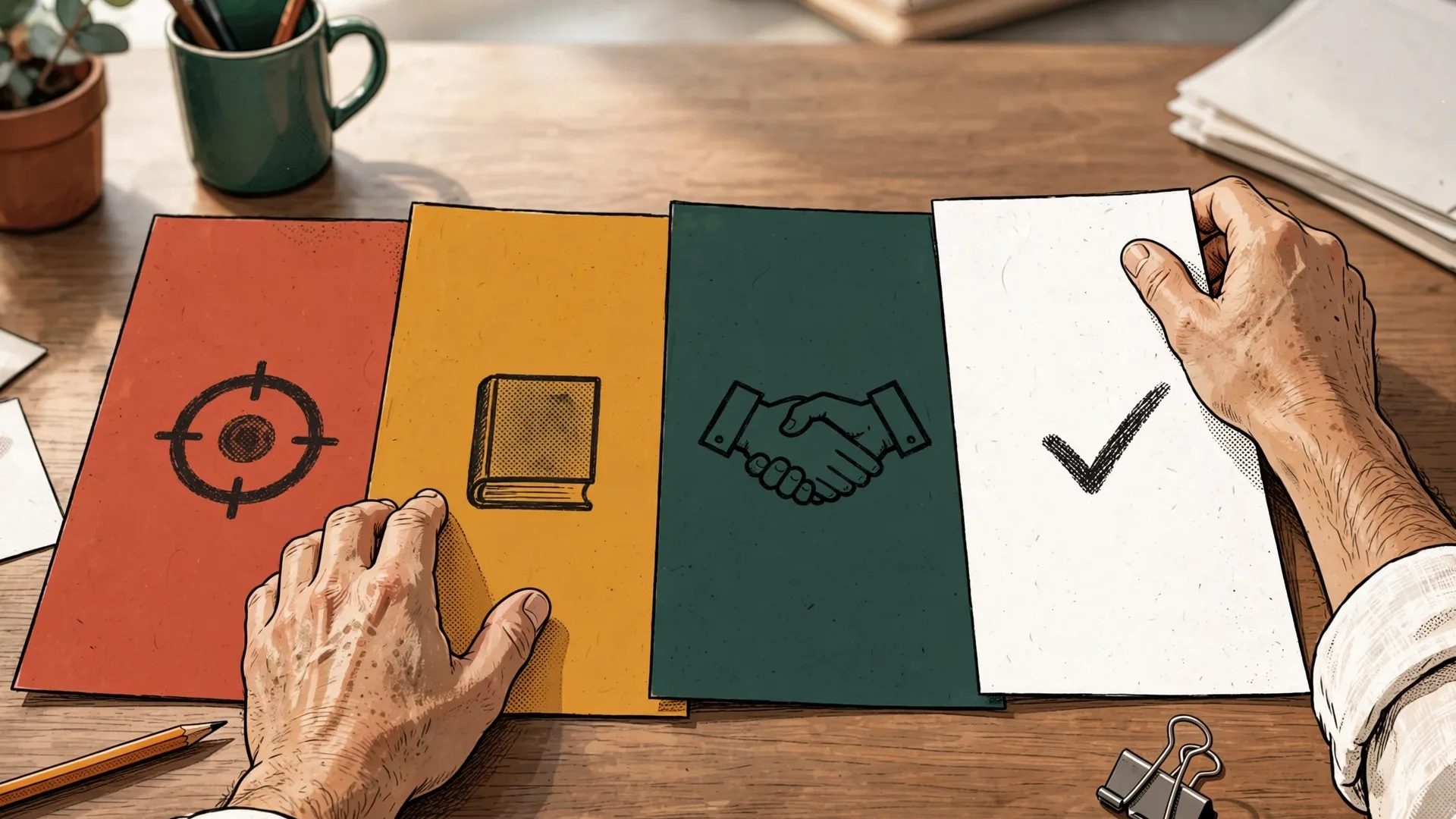
First Week of School: What to Prep (and What Not To)
The first week of school sets the tone for the entire year. Here's what actually matters during those first five days, and what you can safely skip.
Draft My Lesson Team
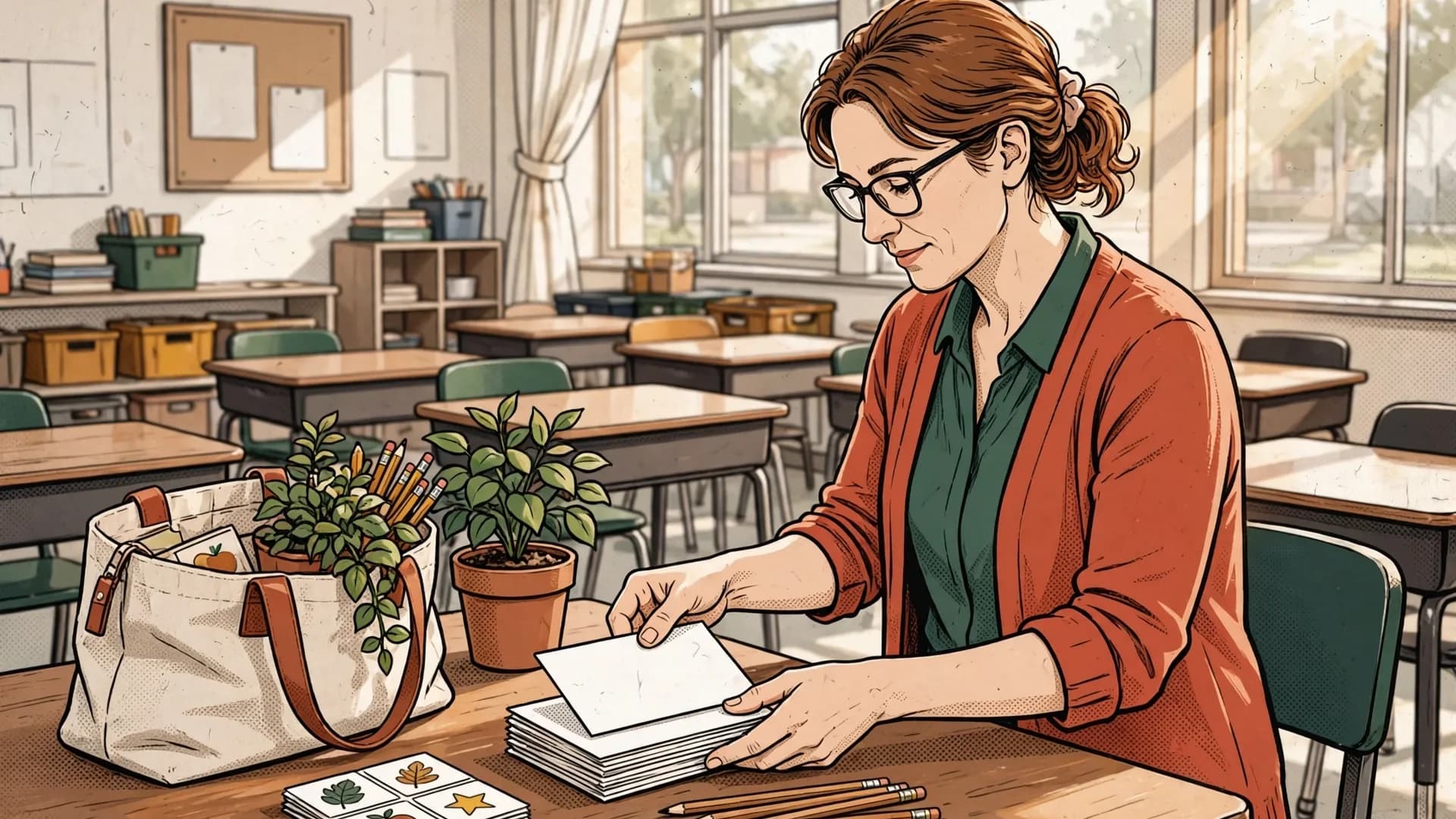
It's the night before. Your classroom is decorated, your name is on the board, and you have three different "All About Me" worksheets printed in case one bombs. You've reread your first lesson twice, color-coded your seating chart, and quietly rehearsed your introduction in the mirror. You feel both wildly over-prepared and completely unready.
Here is the truth that nobody told you in your credentialing program, your induction, or your staff meeting yesterday: the first week of school is not about content. It's not about your icebreaker game, your pretty bulletin board, or whether you finish chapter one on schedule. The first week is about establishing the frame. The frame is the invisible structure inside which the next nine months of teaching and learning will happen, and once it's set, it's incredibly hard to change.
Most new teachers (and plenty of veterans) over-prep the things that don't matter and under-prep the things that do. This guide is your reset. We'll cover the three things that actually matter during the first week of school, the three habits to drop right now, and a day-by-day plan you can adapt for elementary or secondary, whether your year starts in August, September, or January.
Key takeaways
- The first week is about setting the frame, not covering content.
- Three rituals matter most: entry, transition, exit. Teach them like skills.
- Co-create norms with students so they own the contract.
- Replace generic icebreakers with activities that yield actionable intel.
- Warm, calm, clear, consistent beats strict-or-lax every time.
- Steal principles from veteran colleagues, not their exact systems.
3 things that DO matter
1. Routines and rituals (entry, transition, exit)
Students spend roughly 180 days in your room. They will execute the same handful of micro-actions thousands of times: walking in, putting their bag down, getting started on the warm-up, switching from group work to whole class, packing up, walking out. If those micro-actions are smooth, your year is smooth. If they're chaotic, no amount of clever lesson design can save you.
Pick three rituals to teach explicitly in week one:
- Entry: where bags go, what happens in the first 90 seconds (do-now, silent reading, attendance check-in), what the cue is to start.
- Transition: how you move from one activity to the next without losing the room. A consistent signal (chime, countdown, hand raise) beats inventing one each time.
- Exit: how the last three minutes work. Pack-up, exit ticket, dismissal cue. Do not let the bell dismiss your students. You dismiss them.
Teach each ritual the way you'd teach a skill: model it, practice it, give feedback, do it again. Yes, this means rehearsing how to walk into the room. Yes, even with seniors. Especially with seniors. The EEF guidance on behaviour in schools reinforces this: predictable routines lower cognitive load and free attention for learning.
2. Norms built WITH students, not imposed ON them
There's a difference between a poster on your wall that says "Be respectful, be responsible, be ready" and a list of agreements your students helped write. The first is decoration. The second is a contract.
In the first week, carve out 20 to 40 minutes (split across two days if needed) to co-create your classroom norms. A simple prompt works: "What do we need from each other for this room to feel safe, focused, and worth showing up to?" Capture their words. Group them into 4 or 5 themes. Post them publicly with student input visible. Refer back to them when something breaks down (and it will).
This is not soft. This is leverage. When a student is off-task in November, you don't have to be the heavy. You point at the norms they wrote and ask which one needs attention. The frame does the work.
3. Getting to know your students (the useful kind)
Most "Get to Know You" activities yield information you'll never use. Favorite color. Dream pet. Pizza topping. None of that helps you teach better next Tuesday.
Replace it with activities that give you actionable intel:
- A presentation activity where every student introduces themselves in 60 seconds (name, one thing they're good at, one thing they want to get better at this year). You learn names AND strengths AND goals.
- A short writing diagnostic disguised as a personal letter to you. You get a writing sample, a glimpse of voice, and personal context.
- A two-question survey: "What's one thing a teacher did last year that helped you learn?" and "What's one thing that didn't?" You will learn more from these answers than any pre-test.
Plus, this is the moment to start the project that pays dividends all year: learn every student's name and use it correctly by the end of week one. Mispronounce a name once, apologize, ask, write it phonetically, and never miss it again. John Hattie's Visible Learning meta-research ranks teacher-student relationships among the highest-impact influences on achievement, and it starts with knowing who is in front of you.

3 things that DON'T (stop doing them)
1. Rushing into curriculum
There's a strong temptation, especially if you teach a heavy-content subject like AP Bio or 11th-grade English, to "not waste" the first week. You feel the pacing guide breathing down your neck.
Resist. A week of solid frame-setting buys you 35 weeks of efficient teaching. A week of rushed content with no rituals buys you 35 weeks of redirection, repetition, and burnout. The math is not close.
You can absolutely introduce your subject in week one. You can do a hook lesson, a discrepant event, a provocative question. What you should not do is start grading, testing, or piling on homework before students even know how your room runs.
2. Going too strict OR too lax
The classic new-teacher trap: "Don't smile until Christmas." It's bad advice. Students need to see warmth from you on day one. They also need to see clarity and follow-through. Warmth without structure reads as a pushover. Structure without warmth reads as a tyrant.
The opposite trap is just as bad: trying to be the cool teacher who lets things slide so kids will like you. They won't like you. They'll read your lack of structure as a lack of care, and they will test you within 72 hours.
The frame is: warm, calm, clear, consistent. You can be the teacher students enjoy AND the teacher who runs a tight room. They are not in conflict.
3. Copying your colleague's system without adapting
Your mentor teacher has a beautiful classroom management system. Your team lead has a 14-page syllabus you can copy. The veteran across the hall has a routine she's used for 22 years. Take notes, but don't copy.
A system works because of the person running it. If you implement someone else's behavior contract, voice, or routines without asking "does this match how I actually am?", you'll abandon it by October because it doesn't fit. Steal the principles, not the worksheets. Build your own version using your voice, your tolerances, and your subject's reality. The Tes back-to-school hub is a useful place to browse adaptable starting points without falling into the copy-paste trap.
5-day plan, day by day
This is a template. Adjust for your start date (US Aug to Sep, UK early Sep, AU late Jan to early Feb, NZ late Jan to early Feb, CA early Sep), your grade level, and your bell schedule. UK colleagues planning around statutory expectations can cross-reference the official GOV.UK schools and education guidance when shaping induction days.
First-day checklist
- Greet every student by name at the door.
- Teach and practice the entry routine twice before content.
- Run a 60-second introduction round to capture names, strengths, goals.
- Share one real fact about yourself, not just credentials.
- Hand out a one-page syllabus (secondary) or tour the room (elementary).
- Teach an explicit dismissal cue. You dismiss them, not the bell.
- End with one tiny win every student can name when they leave.
Day 1: Welcome and frame
- Greet every student at the door. Use their name if you have it.
- Brief intro of you (3 minutes max, include something real, not just credentials).
- Teach the entry routine. Practice it twice.
- Run the 60-second introduction round.
- Send students home with one tiny win: they know your name, where to sit, and one thing about a classmate.
- Elementary tweak: add a tour of the room and explicit teaching of where supplies live.
- Secondary tweak: hand out a one-page syllabus, not a 14-pager. Save the rest for day 3.
Day 2: Norms co-creation
- Start with the entry routine. Notice what worked, fix what didn't.
- Run the norms-building activity. Capture student language.
- Teach the transition signal. Practice it during the activity.
- First glimpse of subject content: a hook, a puzzle, a question with no homework attached.
- Send home a positive contact email or postcard to 5 families. (Repeat daily until you've contacted every family by end of week 2.)
Day 3: System and assessment
- Entry routine, no reminders if possible.
- Walk students through your assessment system. How grades work. What feedback looks like. What "good work" means in your room. Be specific. Show examples.
- Writing diagnostic or short subject-area diagnostic disguised as a low-stakes activity.
- Teach the exit routine. Practice it.
- Elementary: anchor charts for routines posted by end of day.
- Secondary: post the norms students wrote yesterday.
Day 4: Real content, real work
- Full routine cycle: entry, lesson, transition, group work, exit.
- First real lesson. Aim for medium difficulty so every student experiences a small win.
- Embed one moment of formative check (cold call, mini-whiteboard, exit ticket) so you start collecting data.
- One more wave of family contact emails.
Day 5: Reflect and reset
- Full routine cycle, mostly student-led.
- Short reflection: "What's working? What do you need from me next week?"
- Light content lesson, but real.
- Use the last 10 minutes to acknowledge what's gone well. Name specific students for specific things.
- Spend your prep period reviewing diagnostic data and adjusting next week.
If you want to start building lessons that fit this rhythm without burning your weekend, our guide to creating effective lesson plans with AI walks through how to draft a week of plans in the time it usually takes to plan one.
The first week sets the year, but isn't forever
The first week of school is high stakes, and that's exactly why people overprepare the wrong things. The pretty bulletin board doesn't matter. The 14-page syllabus doesn't matter. Whether you finish chapter one doesn't matter. What matters is whether, by Friday afternoon, your students know how the room runs, who you are, and that you see them.
That said, you will get things wrong. Your transition signal will flop. A student will surprise you. Your perfectly designed first lesson will run 12 minutes short. None of this is fatal. The frame you set in week one is strong, but it's not concrete. You can refine it in week two, reset it after a holiday, retune it after a difficult parent meeting. Good teachers keep adjusting the frame all year. They just don't pretend they don't have one.
So tonight, put down the third "All About Me" worksheet. You won't need it. Reread your day one plan, focus on the three things that matter, and get some sleep. Tomorrow you set the frame. The rest of the year is built on it.
4. Seating charts that support the routines
A seating plan is more than a color-coded diagram: it can make entry, transitions, and group work easier to manage from the first day. A seating chart maker lets you arrange students quickly, adjust the layout as you learn what works, and keep a clear version ready for substitutes.
Draft My Lesson is the AI-powered lesson-planning tool built for English-speaking K-12 teachers. Plan your lessons in minutes and spend more time on what matters. Try it free.
Related articles
How to Write a Lesson Plan: A 7-Step Guide for Teachers
A step-by-step method for writing a classroom-ready lesson plan in under 30 minutes, with three real K-12 examples and the components every plan needs.
Read articleThe 8 Parts of a Lesson Plan (With Examples for Each)
A deep reference guide to the 8 parts of a lesson plan. Worked examples, common mistakes, and what good looks like for objectives, hook, instruction, practice, assessment, and closure.
Read articleTeacher Planner: What to Track (and What to Skip) to Stay Sane
Most teacher planners are either too empty or too full. Here is the lean, four-section teacher planner that actually keeps you sane through the year.
Read articleParent-Teacher Conferences: A Guide for New Teachers
Prepare individual progress conferences and whole-class meetings with clear evidence, family input, agreed actions and a copyable follow-up record.
Read article